 Since 2017, Bob and I have volunteered to go on tour for two to three weeks every summer with the Commemorative Air Force Airbase Arizona. Bob first went in 2016. It took him a year of inviting me to activities at the airbase when we lived in the Phoenix area before I finally agreed to become a member. I haven’t looked back since. We had planned to head east this year on our travels before we knew the B-25J Mitchell and B-17G Flying Fortress WWII bombers were going to do the same. As a result, we found ourselves in somewhat close proximity to them many times. In fact, we visited the tour stop in Ashland, Virginia, when we were in that state. Typically, we board a commercial airline to one of the warbird tour stops and then fly with the B-25 or both the B-25 and B-17 to the next couple of stops before flying home on an airliner. This year, we got a call from the airbase crew scheduler asking if we could help at a stop that wasn’t part of our scheduled tour segment. Since we were in the vicinity, we decided to pitch in. That meant delaying our trip from Massachusetts to Michigan to fit in a weeklong stay at a campground in Plattsburgh, New York. And that meant Gulliver got to go on his first warbird tour. Historical Significance Plattsburgh is only about 20 miles from the Canadian border. The Plattsburgh International Airport, situated on the shore of the 435-square-mile Lake Champlain, was once the Plattsburgh Air Force Base. It still features the buildings and tower that hearken back to its military days in the 1950s, during the Cold War. But the airfield’s history doesn’t start there. The airport is actually known as “the longest active military installation in the U.S.,” dating back to the Revolutionary War, with involvement in every American war thereafter until the airbase's closure in 1995. Designated as a base for Strategic Air Command, the airport’s runway spans 11,750 feet and stretches 200 feet wide. Its size made it an alternate landing site for the Space Shuttle between 1981 and 2011. During WWII, the base served as home to B-47 Stratojet and FB-111 Aardvark bombers. So it made for an ideal stop on our warbird tour — other than the extra long runway. (The passengers didn’t mind, as it gave them a longer ride experience.) Call of Duty We arrived in Plattsburgh on a Sunday and watched the B-17 fly in the next day. While I worked, Bob spent most of the week wrenching on the B-17, which was due for its 100-hour inspection. Since he’s a certified A&P (airframe and powerplant), he needed to be there to sign off on the maintenance work. I was able to carve out a few hours during the week to help train two new ride coordinators on the flight system and proper procedures.  Gulliver transported us to and from the airport (about 3 miles from our campground), as well as to and from restaurants and the hotel where the rest of the crew stayed. He also helped shuttle crew members between locations and hauled tools and supplies from a hangar to the tour trailer after the maintenance was complete.  Gulliver was even on standby to tug the B-17 out of the hangar for its engine check but didn’t get called on. Instead, a tug did that job.  I took off Friday from work to help with the tour stop. Weekends on tour tend to be quite busy as passengers arrive for flight operations on both planes and purchase souvenirs from the tour trailers before we open for static tours on the ground. Then, people from the community show up to climb through the planes, take pictures, and buy mementos. The weekend in Plattsburgh was no different.
I helped as a ride coordinator and flight loadmaster, looking over passengers and engines during flights. Bob pitched in wherever needed. The B-25 arrived Friday afternoon as we were wrapping up flights on the B-17 for the day. After two full days on the airplane ramp, we packed up Tagalong and hooked him up to Gulliver. The next morning, we parked our rig at the fixed base of operations for the last day of flight ops for the tour stop. We stayed for a couple of hours before Gulliver whisked us away to our next destination, grateful for the part he played on the warbird tour. You might also like RV Living vs. Vacation.
3 Comments
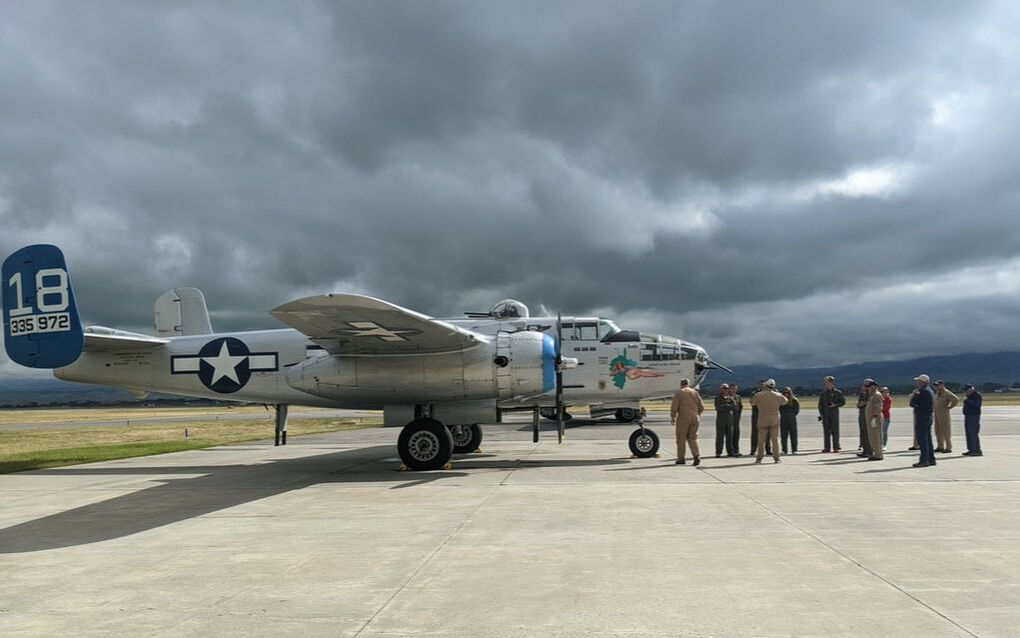 Every summer, Bob and I volunteer to go on tour with the B-25 WWII bomber, “Maid in the Shade,” from CAF Airbase Arizona. The volunteering starts long before summer tour, requiring a time commitment, annual membership dues, and attendance at the annual ground school. Tour is a working vacation where we keep long days to fulfill our mission to educate, honor, and inspire. Fulfilling that mission involves opening the plane for static tours on the ground. Unlike some organizations, we let people climb into and touch our warbirds. It also involves selling Living History Flights to give people a feel for life as an Army Air Force crewman of yesteryear — minus the gunfire and bomb explosions. Passengers get to hear the engines roar to life, smell the smoke they emit on startup, and move about the cabin to different crew positions. As you can imagine, it’s pretty cool to tour with a plane like this. Despite the busy schedule day in and day out, it offers a number of perks. Here are four of them: 1. Travel 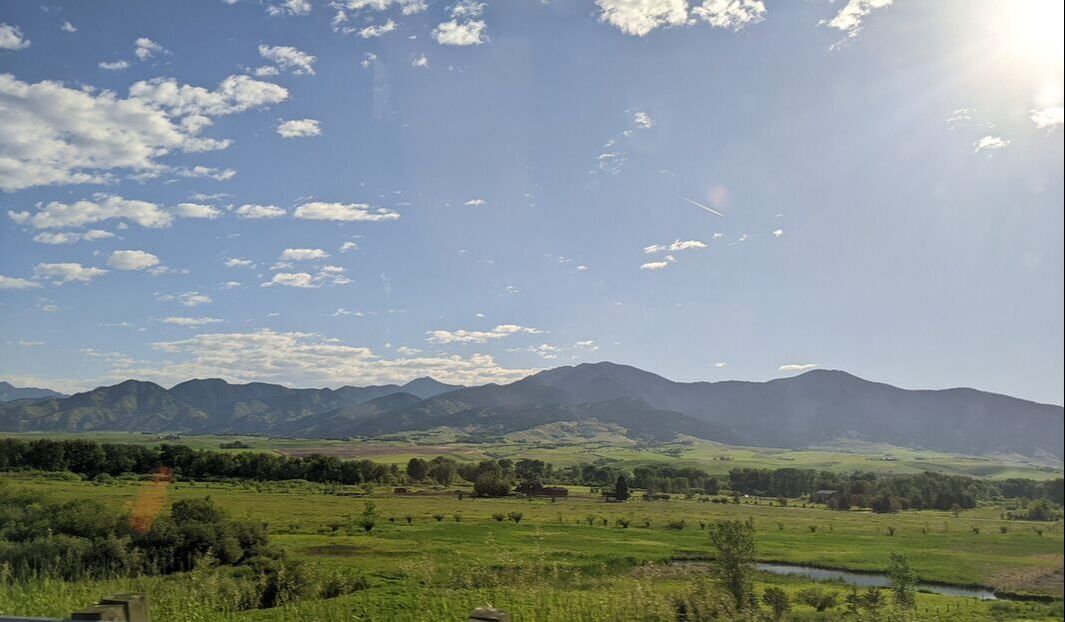 We get to go to some spectacular places. The airbase covers commercial airfare to the plane’s location at the start of a member’s tour if they agree to stay on tour for a minimum of 10 days (and meet all of the other requirements). I typically go for two weeks, and Bob commits to three. Bob’s first tour in 2016 took him to Missoula, Montana, and Everett, Washington. My first tour with Bob in 2017 took us to Penticton and Kamloops, British Columbia, and Lethbridge, Alberta. Together, we’ve visited Nashua, New Hampshire; Leesburg, Virginia; Bristol, Tennessee; Bozeman, Montana; Coeur d’Alene, Idaho; Cape Girardeau, Missouri; Springfield, Missouri; Oklahoma City, Oklahoma; and Kalispell, Montana. 2. Sightseeing  Because we keep a busy schedule on tour, we don’t get to do a lot of sightseeing. While in Bozeman, Montana, for example, we didn’t get to go to Yellowstone National Park, a 1.5-hour drive away. But that’s OK. When time allows, we do get to drive around and explore an area. We typically have Monday afternoons off after arriving at a new location for the week. That’s how we were able to check out the Bass Pro “Granddaddy of All Outdoor Stores” in 2021. A day off in Lethbridge, Alberta, enabled us to visit the Bomber Command Museum of Canada, which houses one of only 17 remaining Lancaster bombers. We also get to enjoy a different type of sightseeing by flying over each tour stop and from location to location. The landscape varies in each area. We got to cruise over the stunning beauty that is Glacier National Park. The scenic flight from Kamloops to Penticton, British Columbia, meandered through canyons formed by a river. Flying over the Mississippi River gave us a bird’s-eye view of the towboats that push barges of heavy, bulky cargo to cities on the river’s banks. In addition, we often get a chance to check out other airplanes. In 2022, those other airplanes included an airworthy F-86 Sabre, a fire bomber plane, and a C-45 Beechcraft on floats. 3. Amazing People 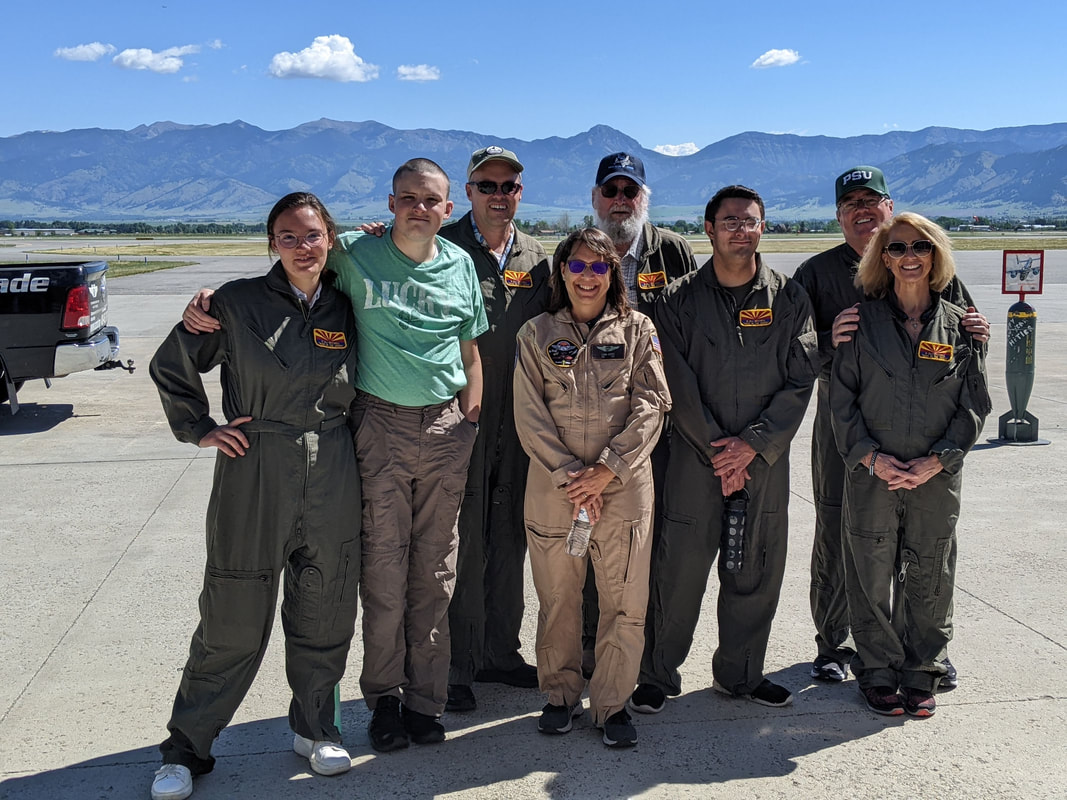 Each week we’re on tour requires a crew of eight to handle ground and flight operations for the bomber. In addition to commingling with amazing volunteers, we meet fascinating people. In 2020, for example, I met Tom Oberweiser over the phone. He requested we fly over his dad’s nursing home to honor the WWII veteran B-25 navigator on our way from Bozeman to Missoula, Montana. We gladly accepted. Although Tom’s dad has since passed away, honoring the vet continued in 2022. Tom and his wife showed up in Bozeman, two hours from their home, eager to meet me and anyone else on the crew who had been involved in the 2020 flyover. The couple booked a flight on “Maid in the Shade” to further honor Lt. Jack Oberweiser and get a taste of what his war days might have been like. 4. Inspiration 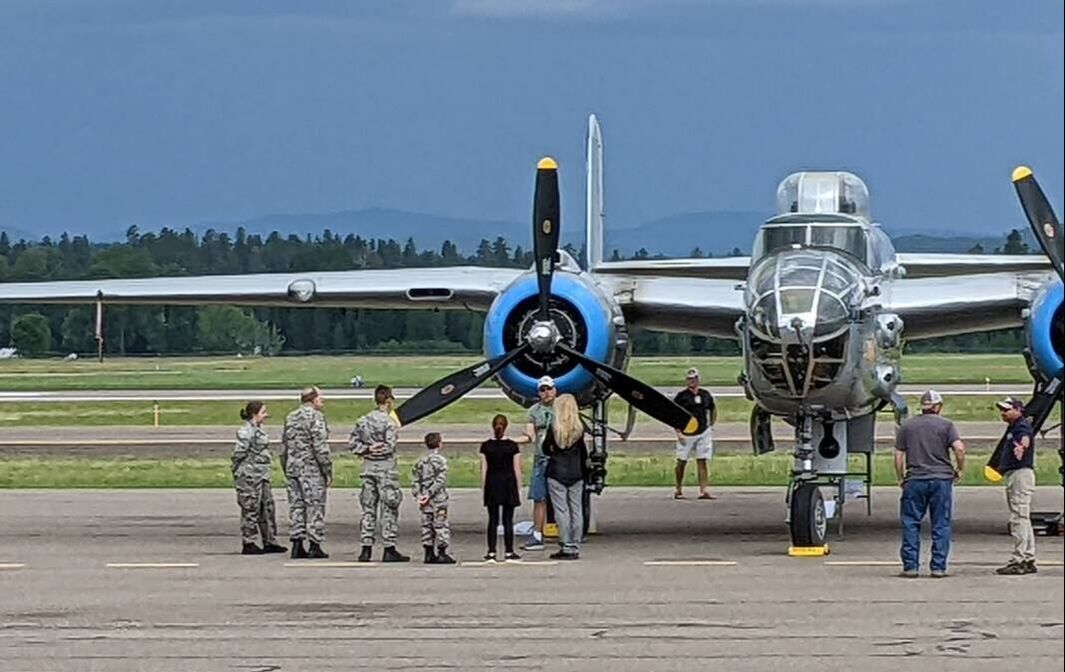 That contact with amazing people is truly inspirational. Although part of our mission is to inspire others, we often find ourselves inspired. When Civil Air Patrol cadets come to our tour stops and pitch in to help us in any way they can, it’s inspiring. When veterans come to see our planes, we find ourselves humbled and inspired. When sons and daughters of veterans visit us in honor of their parents, we can’t help but be encouraged. That was certainly the case when a gentleman named Bob flew into Kalispell on his Stearman biplane, unaware his family had purchased a ride for him on our B-25. Tears blurred Bob’s eyes as he shared about his father, who had flown more than 30 missions on a B-25, and his uncle, who had flown numerous missions on a B-17. Bob regretted the way he had treated his late father but was thankful to be able to honor him by visiting and flying on the B-25. We’re thankful to have been part of that exciting surprise. As I shared with a newspaper reporter, it’s truly an honor to be near and experience these warbirds and to do what we do. 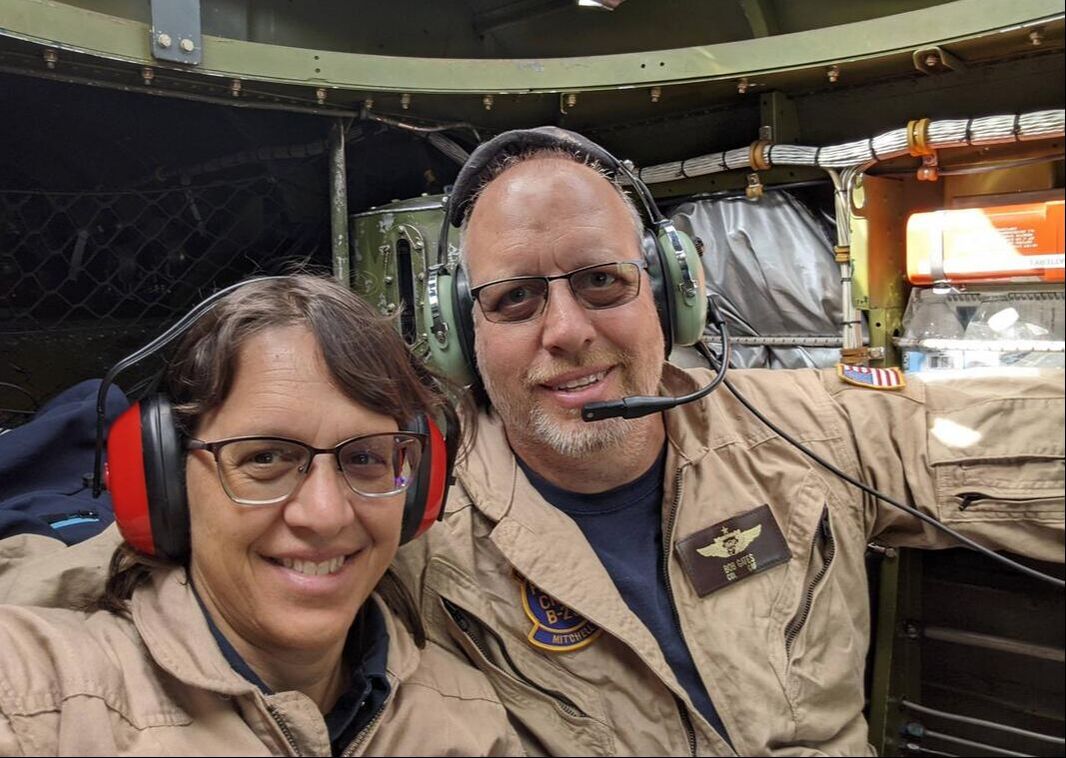 You might also like An Authentic Texas Experience.
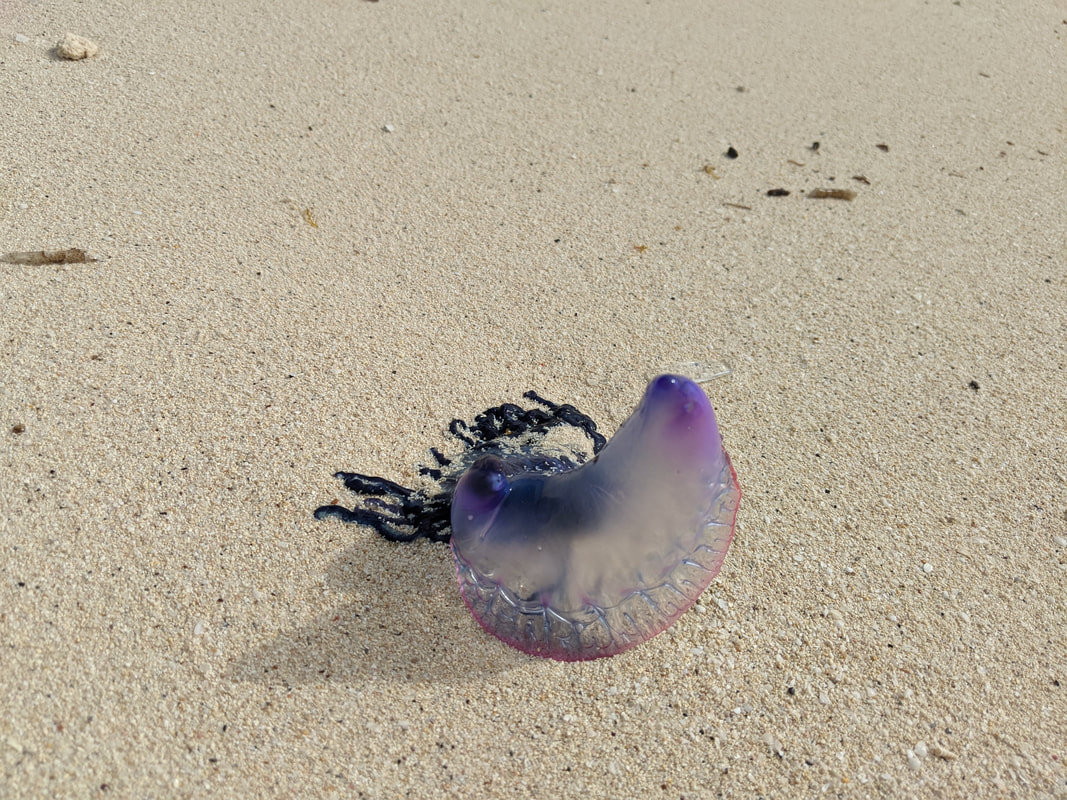
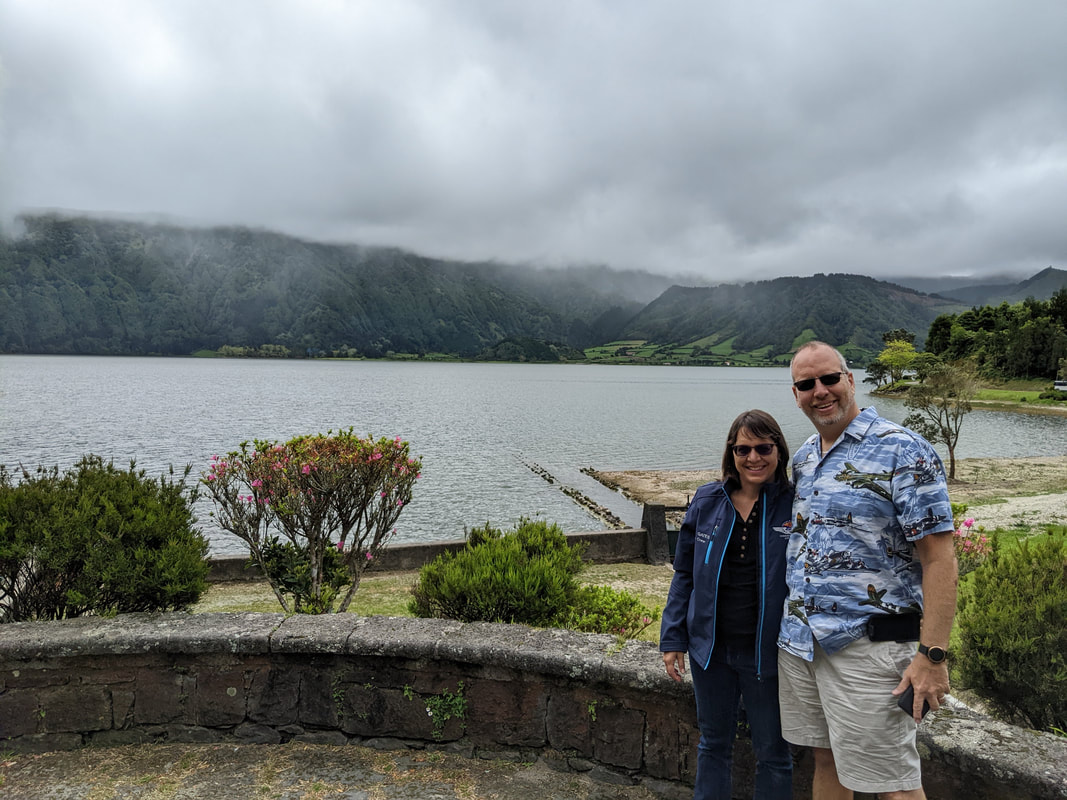
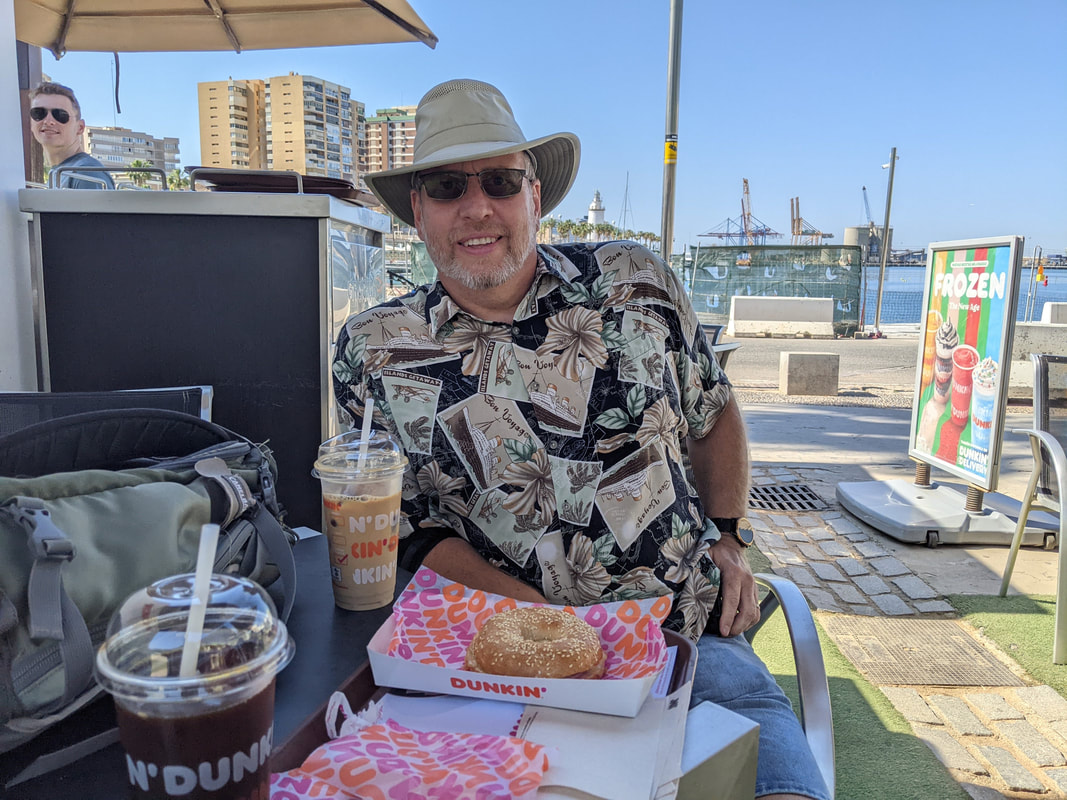
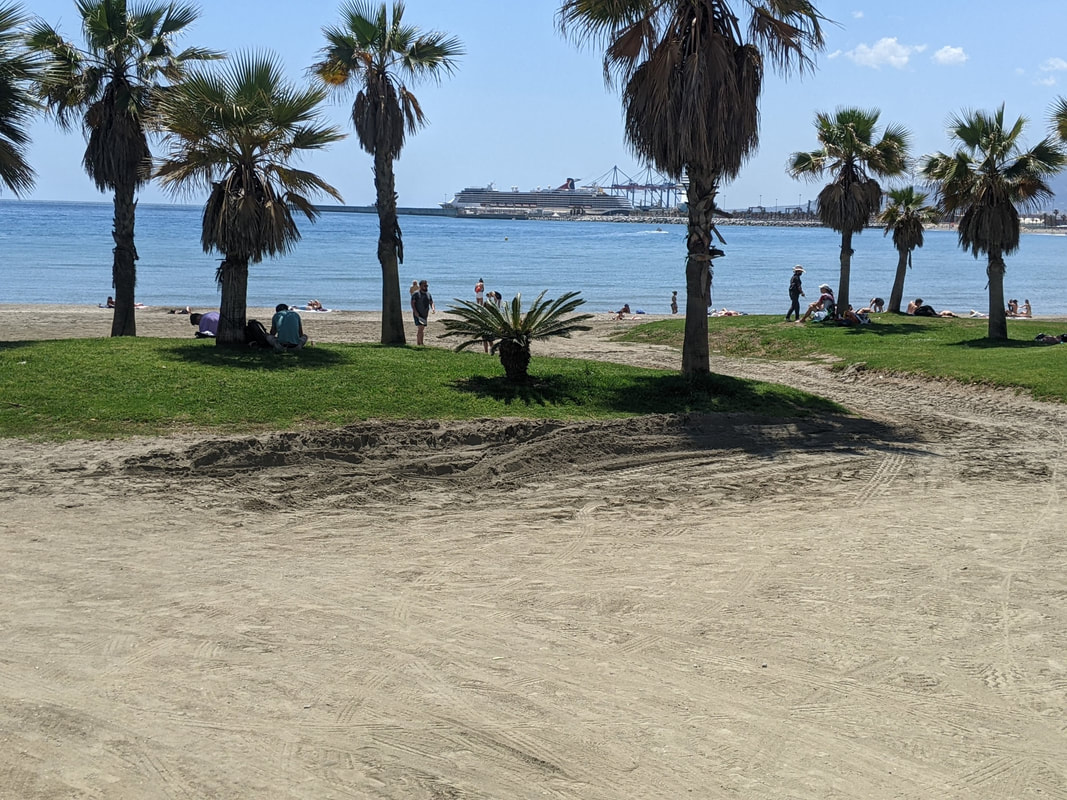
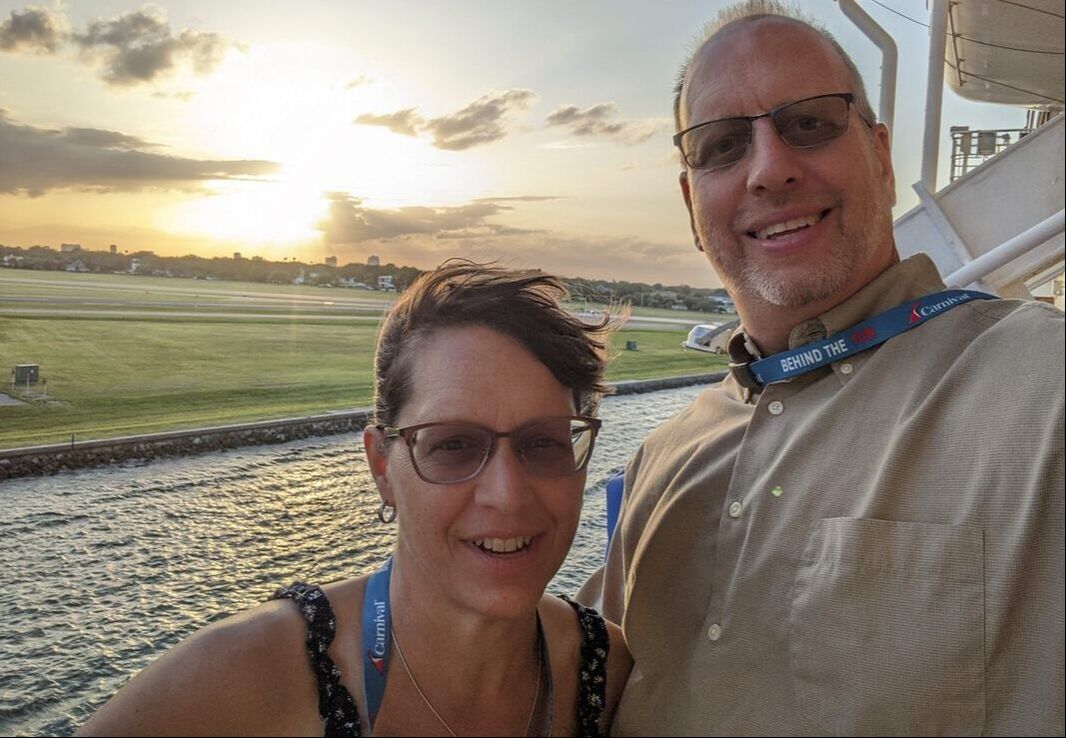 Spain does a few things extremely well. It has designated bike/scooter lanes separate from where vehicles travel and pedestrians walk. It has inviting outdoor eateries down its many narrow alleys. It features amazing architecture. And workers keep it beautifully clean. How do we know? We embarked on a transatlantic cruise from Tampa, Florida, to Barcelona, Spain, with stops in Bermuda; the Azores; Malaga, Spain; and Valencia, Spain. Here are the highlights. Island Adventures Although we delight in sea days, we enjoy visiting ports of call too. After three days at sea, we disembarked in Bermuda. Rented bikes gave us wheels to tour the pink beaches, where Portuguese man o’ war in the sand deterred us from entering the water. Realizing we were no match for the narrow, hilly roads we had to share with motor vehicles — even if they were only going 25 mph — we returned the bikes to explore on foot. Four sea days later, we fell in love with the quiet, laid-back culture of the Azores, where commercialism is kept at bay. Our tour guide, Telmo from T4W, gave us a comprehensive taste of life on Sao Miguel Island, the largest of the nine islands that make up the archipelago that belongs to Portugal. Telmo entertained us with folklore about how the blue and green lakes came to be and how old women throwing rocks from the top of a cliff into the bay kept would-be invaders from overtaking the island. We sampled Portuguese coffee and farm-to-table delicacies from the livestock and produce on the island, including custard tarts and fresh blackberry cheesecake. Cultural Immersion Malaga, Spain, treated us to a familiar sight and taste: Dunkin’ coffee. After caffeinating, we toured the city on rented bicycles, getting past the typical tourist traps to experience a less crowded beach, even dipping into the Mediterranean Sea up to our necks. Having made fast friends with our assigned dinner companions on the cruise, we joined Frank and Pam to explore the city of Valencia. A bus delivered us to the heart of town, where we had a wonderful time walking the alleys, taking in the city’s beauty, and sampling local meats and cheeses. The cruise came to an end in Barcelona the morning of Mother’s Day. It happened to be the same day as the Barcelona Marathon, so we sat and watched runners pass us by for about an hour, thrilled at the opportunity to see such an event in person rather than on TV. Wanting to make the most of our day in the city, we navigated to the Basilica of Santa Maria del Mar, a 14th-century cathedral built over a total of 55 years, with setbacks due to an earthquake and a fire. Today, it’s open to visitors daily. Arriving just in time for the Sunday mass, we decided to stay. Bob used Google Translate to try to understand the message. The app got some things right, but others it didn’t, such as something about six German sisters with ducks. That gave us a good chuckle. From there, we wandered the narrow alleys in search of lunch, stopping at a little place where we ordered mussels, a cured meat plate, and a cheese plate. But the best part was the toasted fresh bread smothered with olive oil and tomatoes. I risked a gluten-induced headache to partake. The bread melted in my mouth with explosive flavor. Delicioso! And I’m happy to report no headache ensued.  The Longest Travel Day
We spent the night in Barcelona and headed to the airport early the next morning for our required COVID-19 test before we could fly back to the United States. After getting confirmation that we both passed the test, we headed to an airport lounge for breakfast before boarding a plane to gain back the six hours we had lost traversing the Atlantic Ocean. Arriving at John F. Kennedy Airport in New York eight hours later, we quickly learned why three hours are needed for international flights. We had to jump through a lot of hoops: customs, a passport check, and navigating to the correct gate. We connected through Atlanta before landing in Tampa, Florida, where a parking lot attendant whisked us to the lot where we had left Gulliver 15 days earlier. Happy to be reunited with our vehicle, we climbed aboard and drove two hours to reach Tagalong, finally arriving home at 3:30 a.m. after 28 hours of travel. What a day! You might also like Homeless for 3 Days. 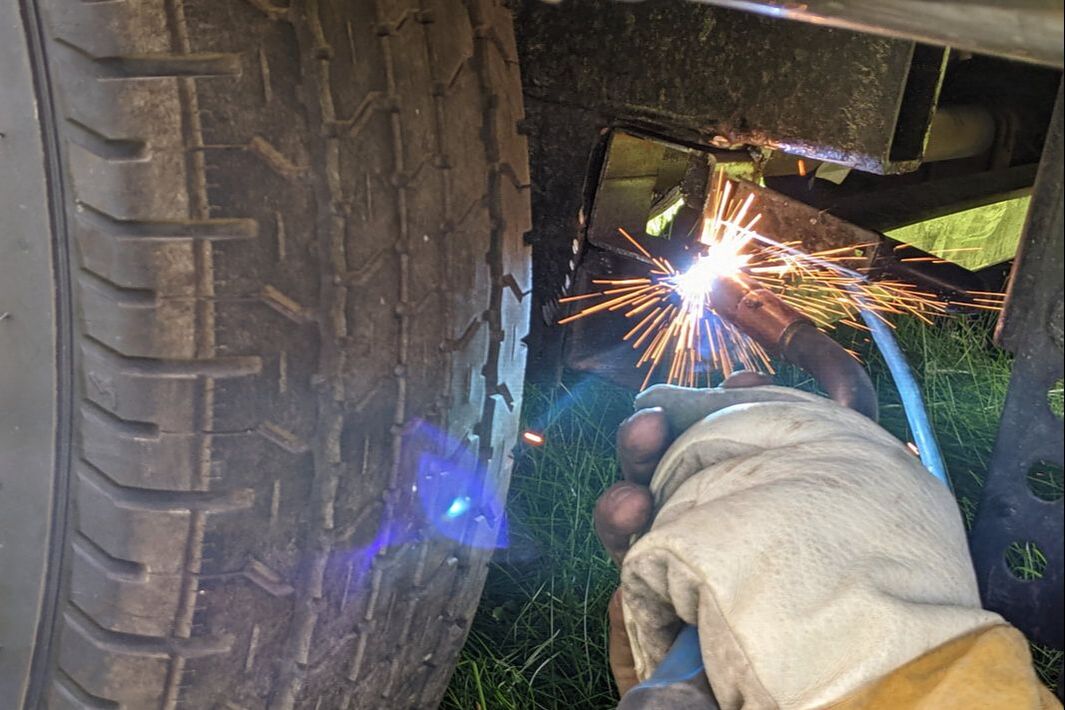 It should have been an easy brake job. Bob had all the parts to replace the trailer brakes and the mechanical know-how to get the job done. The problem was trying to lift all of Tagalong’s 17,000 pounds to get the tires off. Bob had successfully jacked up the trailer before to grease the axles. We had hooked it up to Gulliver for better stability and carefully raised Tagalong’s back end. Bob had also succeeded in lifting Tagalong when we needed to change a flat tire. When Bob attempted to lift Tagalong this time, however, I received a text message while working across the street at my cousin’s house: “I broke the trailer. Come see.” Thoughts flooded my mind as I made the short trek across the street. “Oh no! That’s our home!” “At least we’re with family and have time before we plan to journey on.” “That’s more good fodder for the blog.” Jacking the Trailer: Take 2 The pressure of Tagalong’s weight against the jack ended up breaking the welding joint of a metal beam spanning the trailer’s underside. Fortunately for us, the farm mechanics were having a slow day, and one of them had time to re-weld the joint on our trailer. After that, Bob tried a different method for his second attempt at raising the trailer. To make up for the gap between the jack and Tagalong’s main structural I-beam, he used an 8-inch section of a 6x6 beam. As the beam took on Tagalong’s heavy weight, it couldn’t stand up under the pressure and split in two pieces, rapidly dropping the trailer back down. Thankfully, Bob stayed safe during that ordeal. 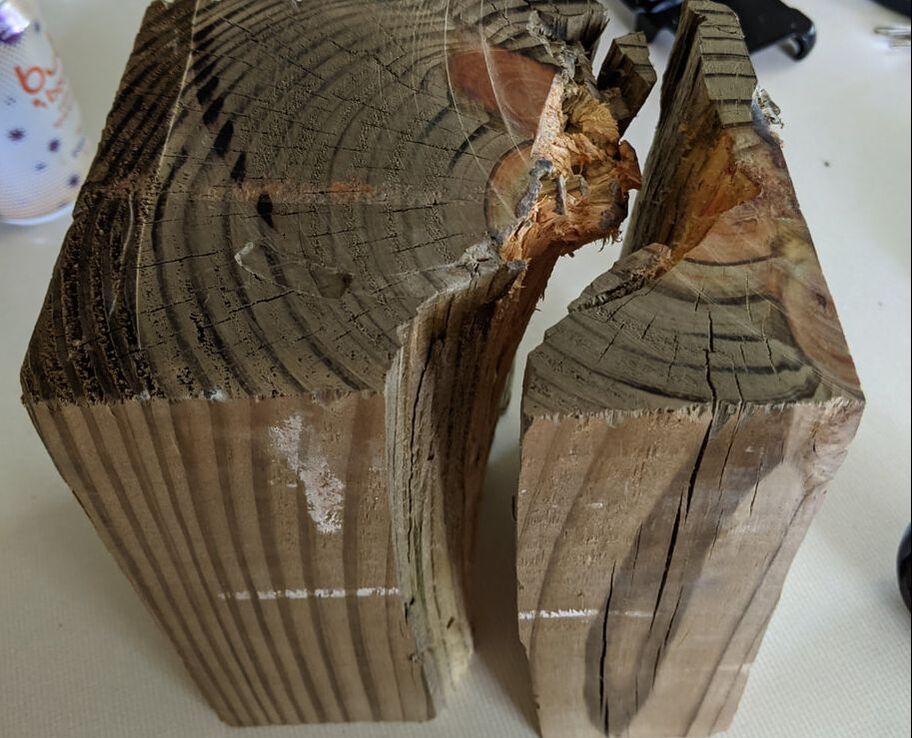 The difference between this time and the previous successes of lifting the trailer had to do with the ground. Here, we started from an uneven rather than level surface. Plus, it had rained recently, which only complicated matters by making the ground softer than normal. Saying Goodbye We decided not to attempt the brakes a third time but to get professional help. Because Bob had planned to do the work, we had all of the parts. That meant we’d only have to pay for labor. A local place about 10 minutes away offered the service we needed but had a reputation for not getting to jobs quickly. We wanted to be homeless for as little time as possible. Dropping off your home is an eerie and humbling feeling. And this time, we left Gulliver too. We reminded the shop techs they had everything we owned, and then we watched one of them drive our earthly belongings away, leaving us with the clothes on our backs and a few things we had taken to my cousin’s house. 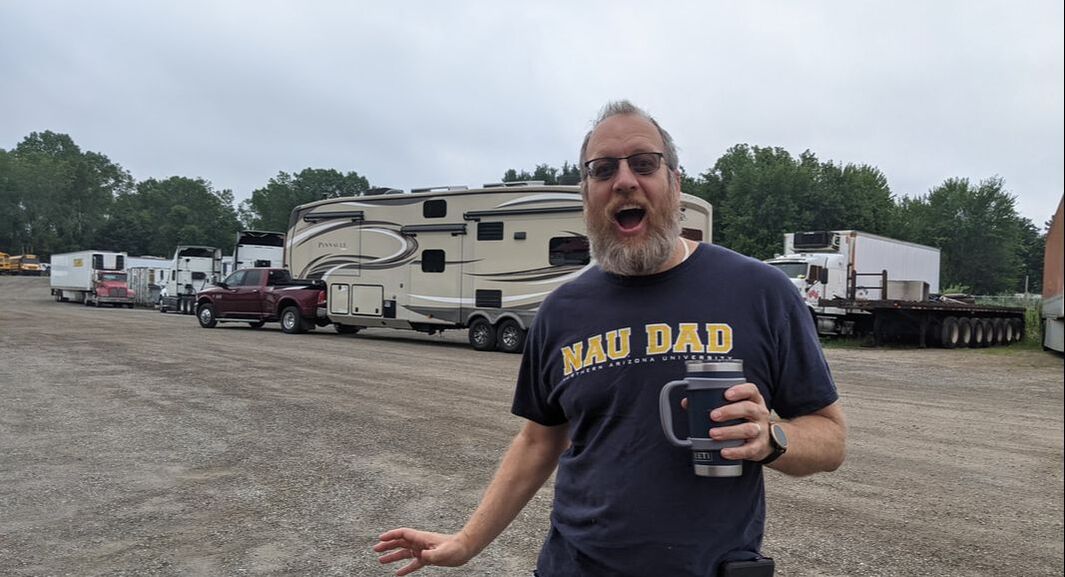 It brought me back to the age of 10, when I stood with my family as we watched the mobile home we had lived in for a year drive down the street and out of our lives. We had rebounded from that short time of homelessness just fine, so I had hope Bob and I would rebound from this one too.
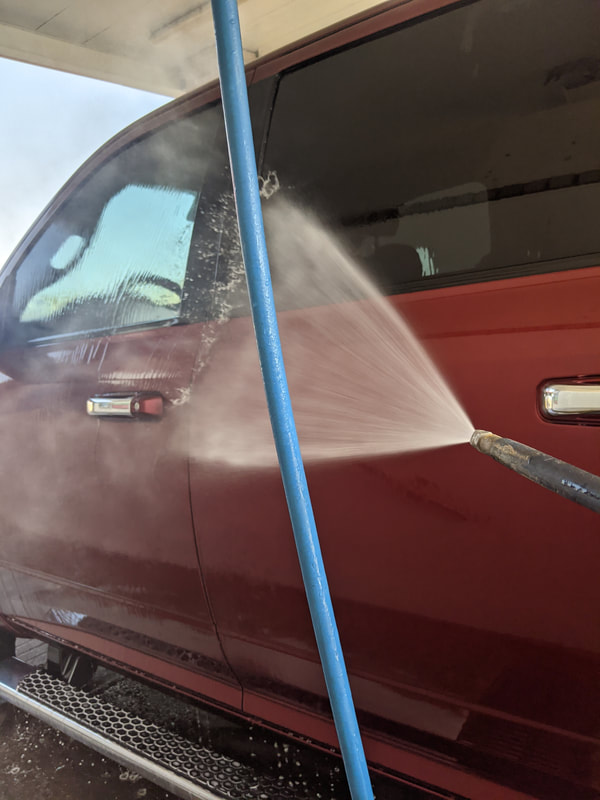
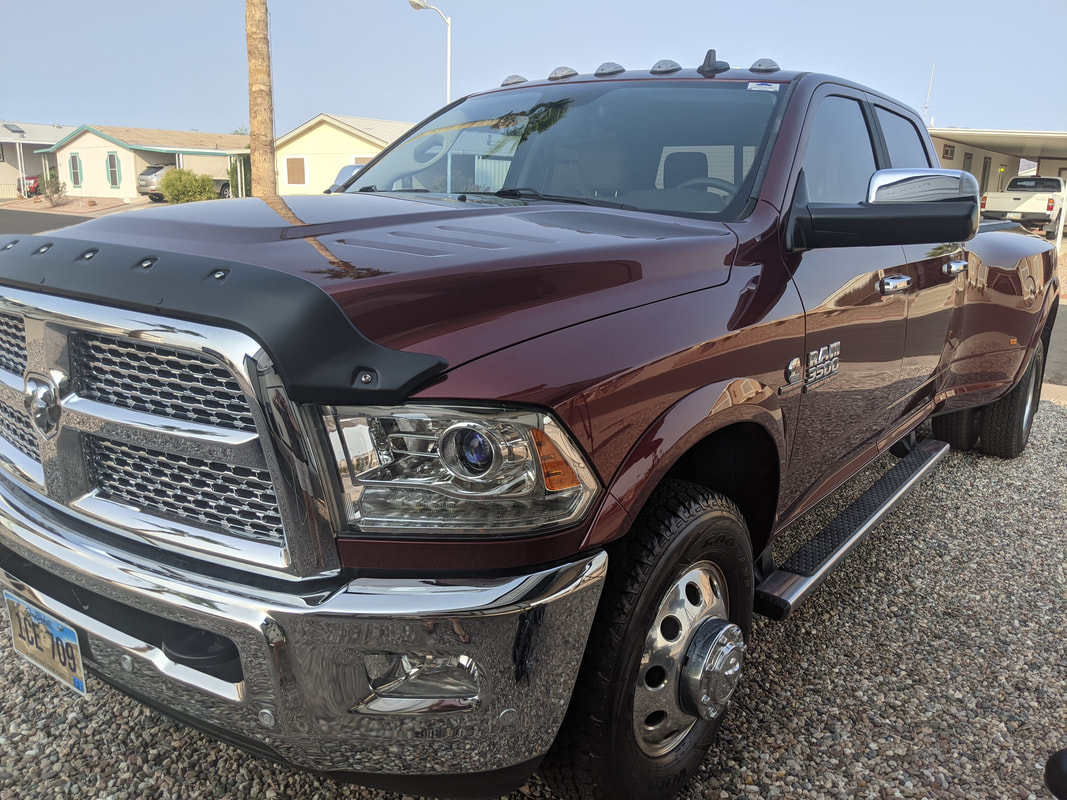
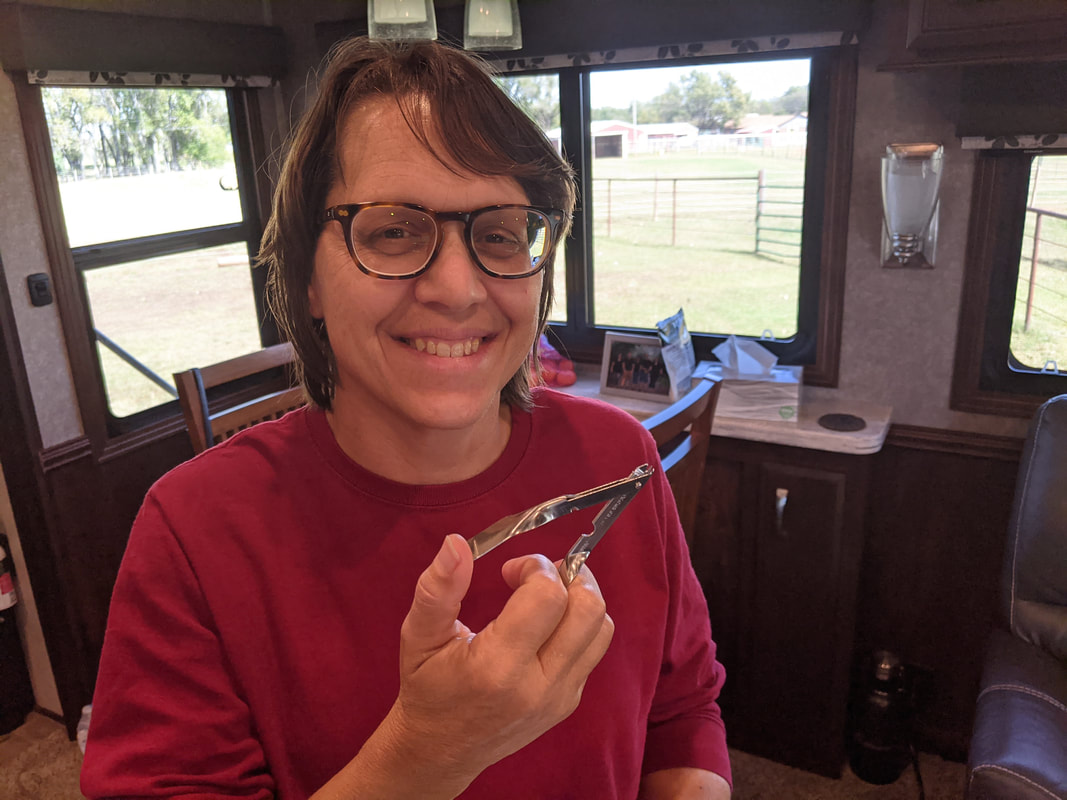
A Blessing in Disguise One day at the shop stretched into two. Bob got a call notifying him that our trailer would definitely be ready for pickup by the end of that second day. But a subsequent call informed us of a new discovery. The shop successfully changed the brakes and the wheel bearings, but the trailer brakes still weren’t grabbing. A larger problem loomed, but the techs wouldn’t be able to troubleshoot it until the following day. This explained the problem we first noticed when leaving our daughter Megan’s in Tennessee. The electric trailer brakes didn’t grab like they should — a huge safety issue. We were able to increase the grabbing power of the brakes and stop when needed, but this new discovery confirmed the brakes themselves weren’t at fault. Rather, the issue lay with the wiring or a connection. Had Bob succeeded in changing the trailer brakes, we would have presumed the trailer was good to go. We wouldn’t have attempted to use the brakes until hooking up the trailer to Gulliver and leaving for our next destination. So, it turned out to be a blessing in disguise that we ran into so many issues with trying to change the brakes. The techs replaced a small section of faulty wiring and, after three days, we got our home back. This whole experience left us with immense gratitude — for our safety, our home, Ethan who welded the beam back together, my cousin Debbie's hospitality in our time of homelessness, and the professionals who discovered, troubleshot, and repaired the source of the problem. God is good. 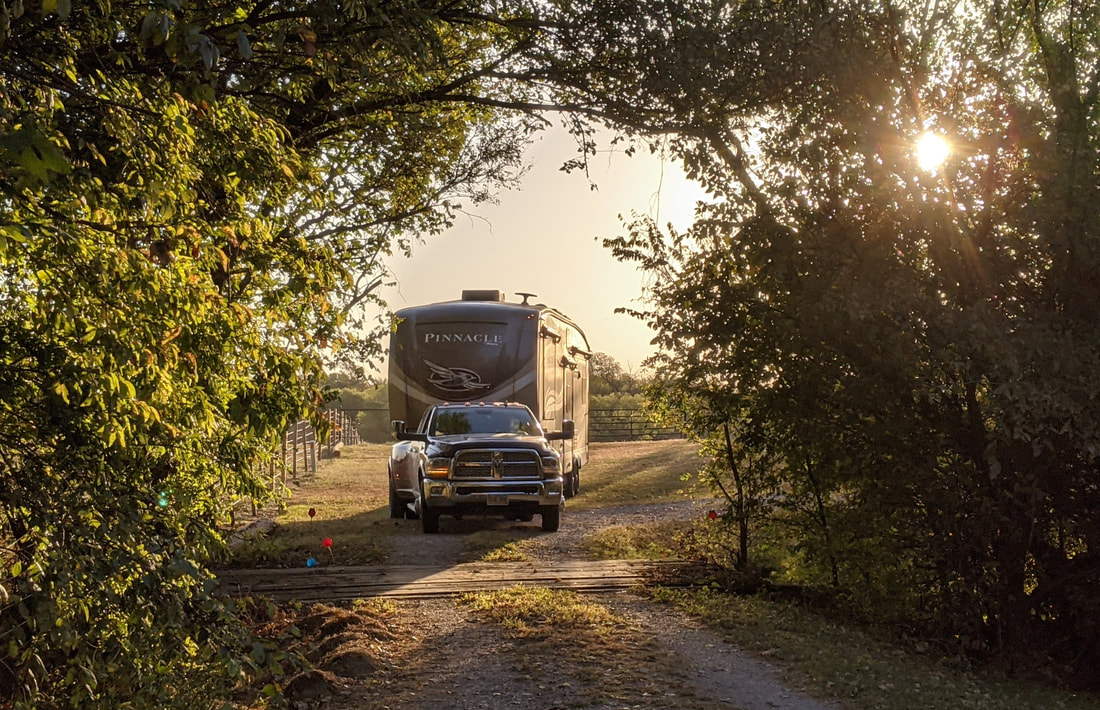 “The best-laid plans of mice and men often go awry,” penned Scottish poet Robert Burns. That saying applies well to full-time RVing, where plans change constantly. We had planned to spend a few nights near Amarillo, Texas, at a city park that offers free water and electricity, followed by a week in New Mexico with Boondockers Welcome, before returning to the White Mountains of Arizona and then the Valley of the Sun for the winter months. Instead, we covered about 670 miles in 13.5 hours between Oklahoma City and Gallup, New Mexico, making our first stay in a Walmart parking lot, where the store’s outdoor radio played all night long. The next day, after another five hours and 265 miles, we arrived in the Phoenix area to help Bob’s mom after she fell and broke her hip. She had a partial hip replacement and is on the road to recovery, enduring physical therapy. We didn’t know it at the time, but the warmer temperatures we experienced in Oklahoma were a harbinger of what was to come. We traded the plains for the Valley and its 90+-degree weather. And that’s only one of the many transitions in our lives right now. Squeaky Clean Gulliver ate a lot of bugs and gathered substantial dust on the journey. So, he got a much-needed bath and a respite from towing, even though he’s built for towing. Driving around without the trailer attached makes for a bumpier ride because of his tight suspension. Bob’s head is now staple-free after 10 days. We had ordered a surgical staple remover from Amazon, and I pulled out the surgical fasteners all by myself while Bob held up a phone to record the experience. The right tool does a great job. We’re adjusting to being static and not moving every week. It’s a transition as we’ve grown to love that lifestyle. During this downtime, we’ll do some repairs on the trailer — fix some drawer rails and door trim — inventory our belongings, and get rid of things we haven’t used and don’t need. We’ll also take advantage of the opportunity to do some deep cleaning.
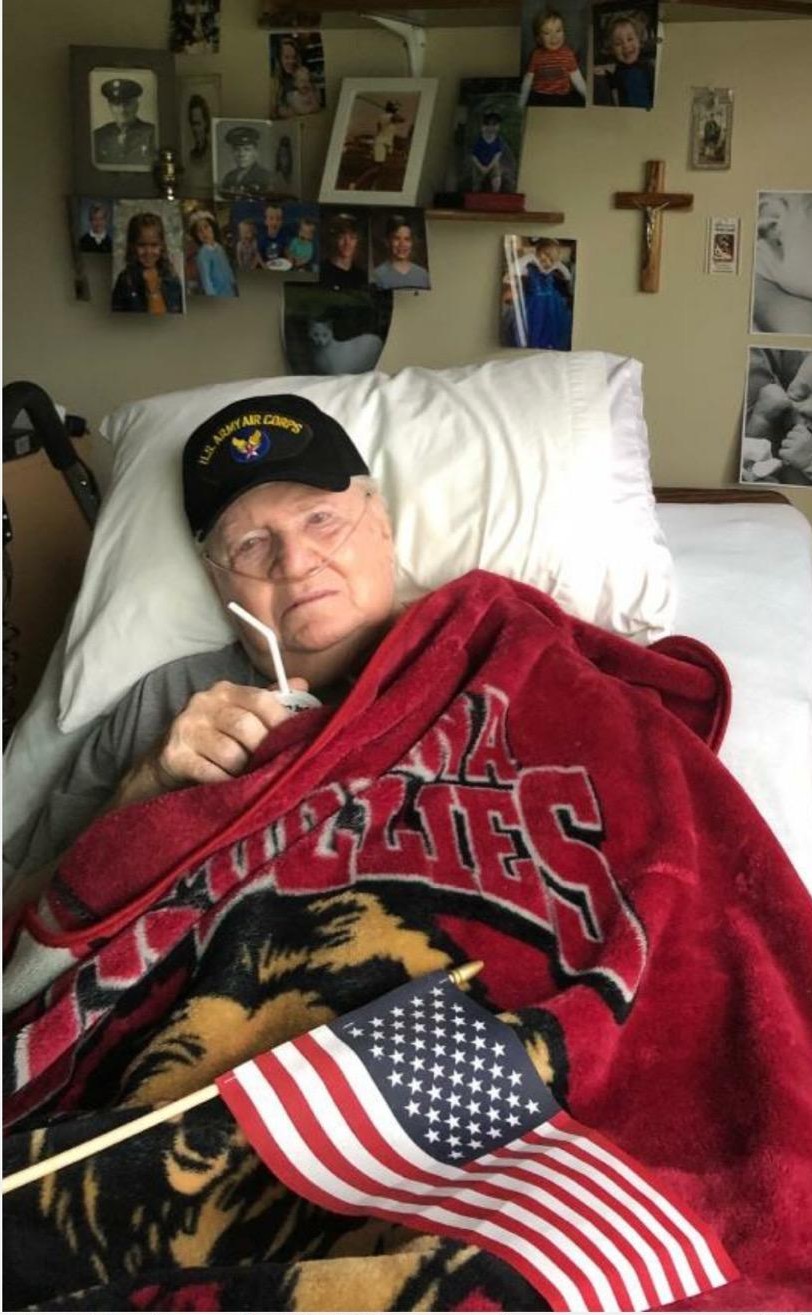
The Immovable Tagalong This immobile adjustment also gives us the opportunity to spend more time at the Commemorative Air Force Airbase Arizona, where we’ve volunteered for about five years. Bob helps with maintenance on the WWII aircraft, and I help coordinate rides on them. He’s excited to be one of the retired Monday, Wednesday, Friday mechanics. Although we’ve exchanged small towns for city life again, we’re enjoying seeing mountains and reconnecting with family and friends in the area. And, we’re hopeful another transition will be to a full-time job for me before too long. It’s a bittersweet time of change and reflection. We’re thankful we got to catch up with family and friends across the country, some of which we hadn’t seen in many years. We like the RV lifestyle and are already making plans for our next big adventure. 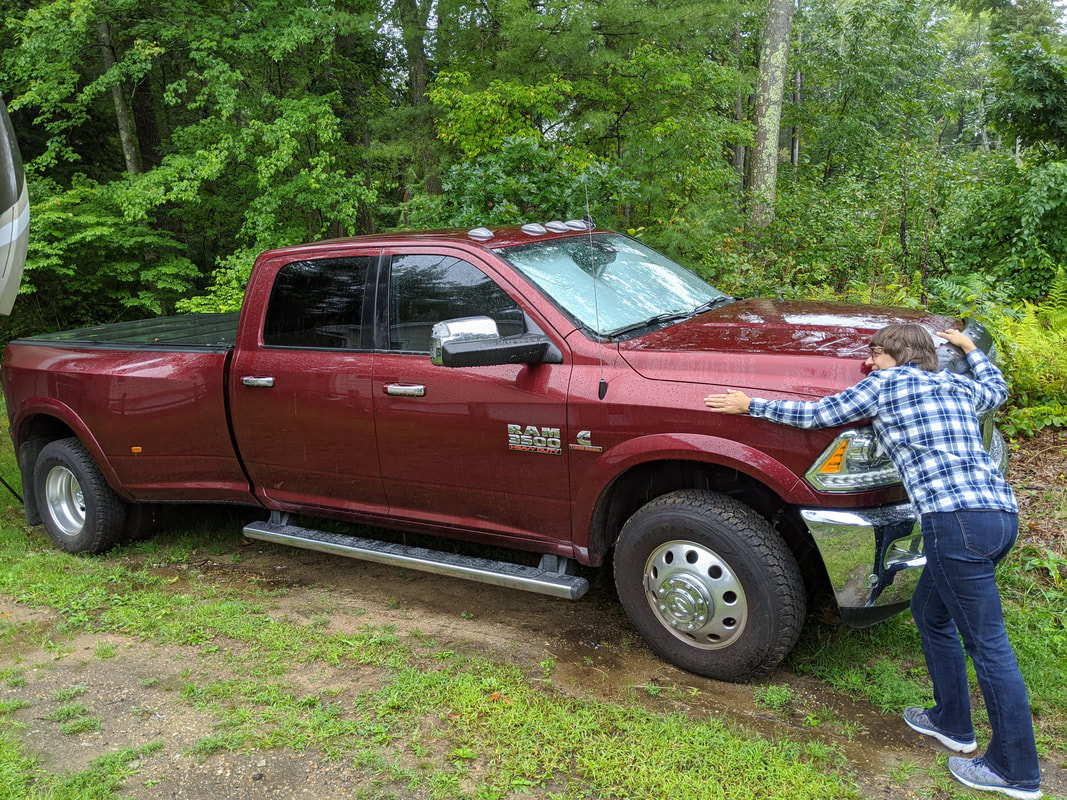 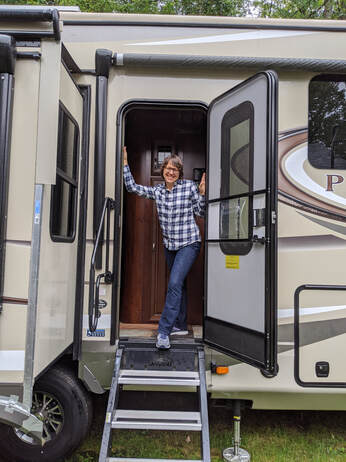 After our first separation from Gulliver and Tagalong since we started our journey in May, we are elated to be back together. We’re happy to be able to sleep in our own bed with our own pillows again. There truly is no place like home. Gulliver and Tagalong, who both fared well during our absence, greeted us with open arms — and no unpleasant stench or damage. All is well. And Gulliver roared to life with no problem. Honoring a B-25 Navigator We enjoyed our tour with the B-25 “Maid in the Shade” in Montana and ended up filling eight living history passenger flights while in Bozeman. On the way from Bozeman to Missoula, we had the privilege of circling the small town of Anaconda in honor of a 95-year-old WWII vet who resides in a nursing home there. When John E. “Jack” Oberweiser learned the B-25 was 25 miles from his town flying at 6,500 feet and 211 miles per hour, he announced to the staff at his facility, “They’ll be here in two minutes.” His daughter rushed to wheel her mother, 93, also a resident of the facility, into Jack’s room so the high school sweethearts, now married 72 years, could be together for the momentous occasion. Tears streamed down the couple’s faces as they sat holding hands while watching the bomber and hearing the roar of its engines exactly two minutes later, just as Jack had predicted. Like his buddies, Jack joined the U.S. Army Air Corps in 1943 at the age of 18 as soon as he graduated high school, eager to serve his country. He completed basic training at Santa Ana Air Base in California, where he once walked to the Rose Bowl and passed Bob Hope in the stands. Lt. Oberweiser served as a B-25 navigator in the China-Burma-India theater with the 491st Bombardment Squadron — known as the “Ringers” for their low loss of aircraft and personnel. The squadron targeted airfields, storage areas, and bridges. 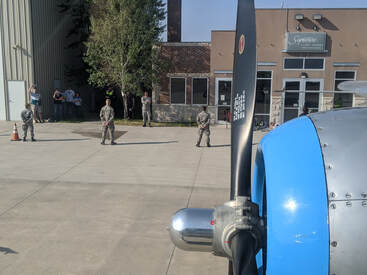 Toward the end of the war, Jack spent time in France and Germany ferrying aircraft back to air bases in Europe. On one mission to Cairo, Jack, an avid sports fan, got to listen to the 1945 World Series game between his favorite Detroit Tigers and the Chicago Cubs, actually using the radio signal as a navigation tool.
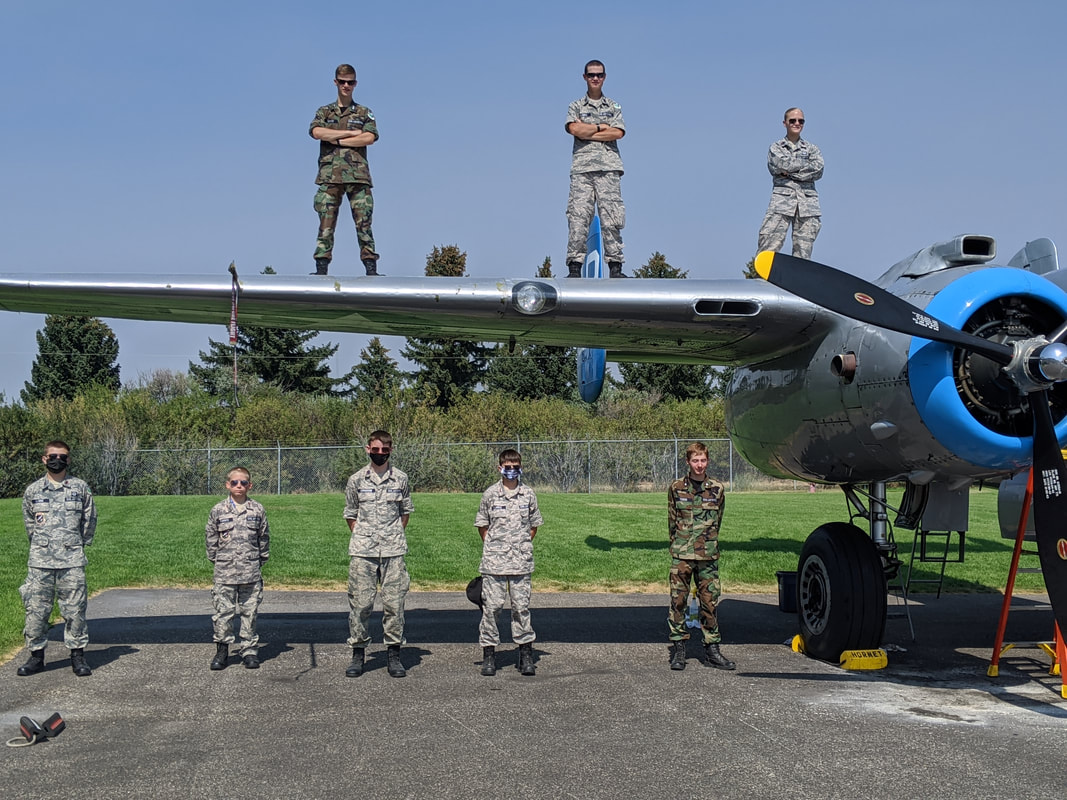
On another ferrying mission, Jack’s plane made an emergency landing when something went wrong with the landing gear. Heavy rain prevented a fire as the plane slid on its belly. After the war, Jack and his sweetheart were reunited and raised seven children in Anaconda, where he worked as a football and track coach and taught geometry and bookkeeping. The whole town celebrated the B-25 flyover in honor of Jack and his service — and, as he stated, “ALL of the local veterans.” It was a true honor for us and the rest of the “Maid in the Shade” crew to participate. After all, that’s what the Commemorative Air Force is all about: educating, honoring, and inspiring. Inspiring the Next Generation Not only did we have the privilege of honoring Lt. Oberweiser, but we also got to work closely with a number of Civil Air Patrol cadets in Bozeman, educating them and the public about the history of “Maid in the Shade” and the part B-25s played in the war. These kids eagerly showed up numerous days to help clean the plane and to ensure crowd safety during our flight operations. They very professionally secured the flight line, standing at attention with their backs to the plane so they could monitor the crowd, resisting the urge to turn around and watch as the bomber’s engines started and as it taxied in after a flight. Many of the cadets have big ambitions of going into the Air Force and working with aircraft in some capacity or another. We’re thankful for the small part we got to play in inspiring them, and we look forward to what they’re going to do in the future. 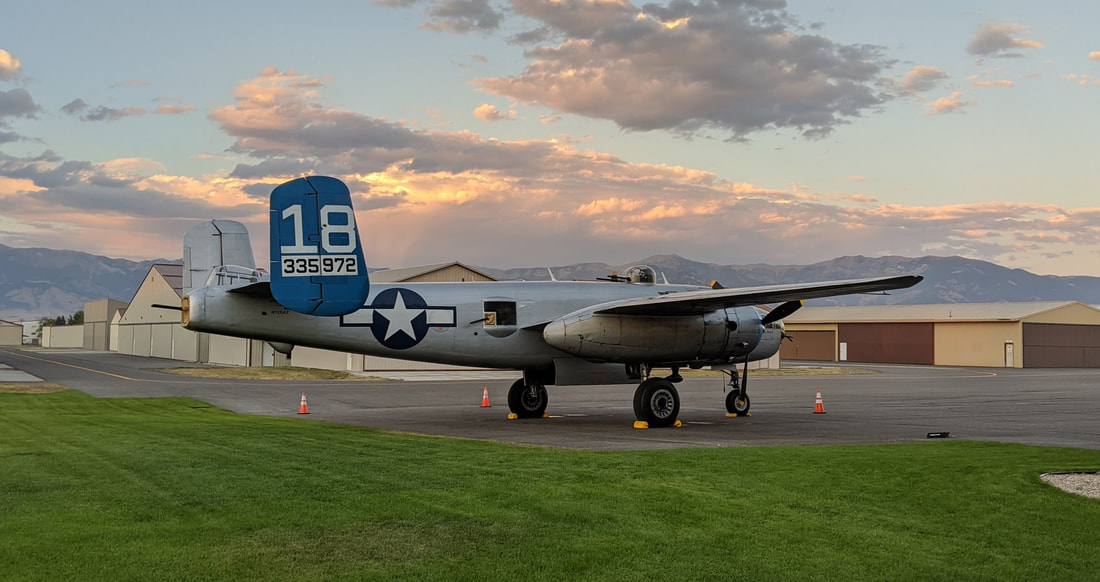 This summer, we’ve been able to mark three more states off our list of those to visit: South Dakota, Wisconsin, and Montana. Bob had actually been to Wisconsin and Montana before, but I hadn’t. That only leaves North Dakota for both of us to visit to complete all 50 states. However, since we left Gulliver and Tagalong in Massachusetts and flew to Bozeman, Montana, we don’t get to count this state on our RV map. But that’s OK. We plan to bring Gulliver and Tagalong here next year. What Are We Doing in Montana? Bob and I volunteer with the Commemorative Air Force (CAF), specifically Airbase Arizona. And every summer, Airbase Arizona takes its two WWII bomber planes — a B-17 Flying Fortress, “Sentimental Journey,” and a B-25 Mitchell, “Maid in the Shade” — on tour throughout the U.S. and Canada to fulfill our mission to educate, honor, and inspire. While on tour, we sell static tours to the public, allowing them to go inside our planes and learn about their history. The B-25 is a true WWII veteran, having flown 15 missions over Italy and Yugoslavia while stationed on the island of Corsica in the Mediterranean. The B-17 was built toward the end of the war and never saw combat but served as a fire bomber after the war. The CAF is made up of volunteer members, and many of us take two weeks a summer (some take more) to go meet one or both of the planes wherever they are to be part of the tour. Bob is a mechanic on the B-25, so he serves as the flight crew chief for our two weeks on tour. That means he’s responsible for maintenance on the plane both on the ground and in the air. 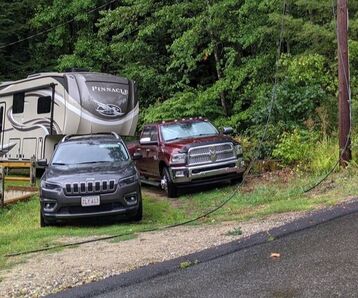 I serve as a ride coordinator, so it’s my job to book passengers on the plane and coordinate the paperwork for the passengers. I also serve as a loadmaster. We fly with four crewmembers on the plane: two pilots, the crew chief, and a loadmaster. The loadmaster flies in the back, or waist section, of the plane and takes care of the four passengers we fly there, overseeing sending them to the tailgunner position during flight. The loadmaster also keeps an eye on the engines.
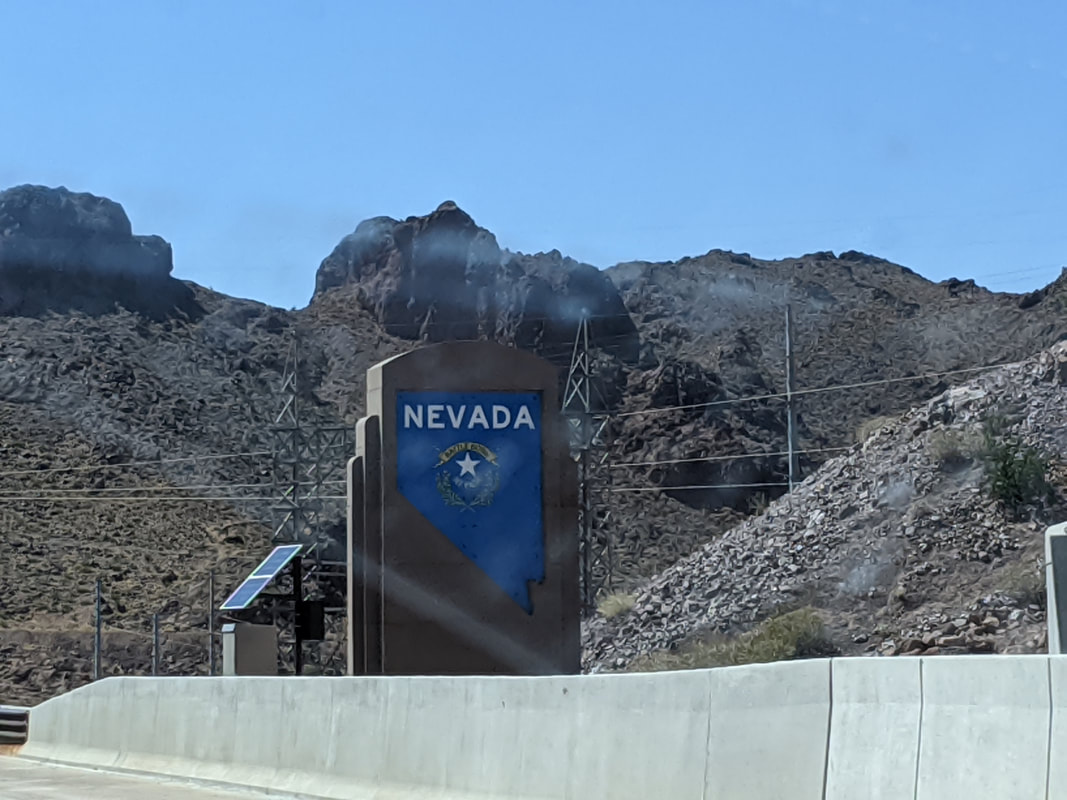
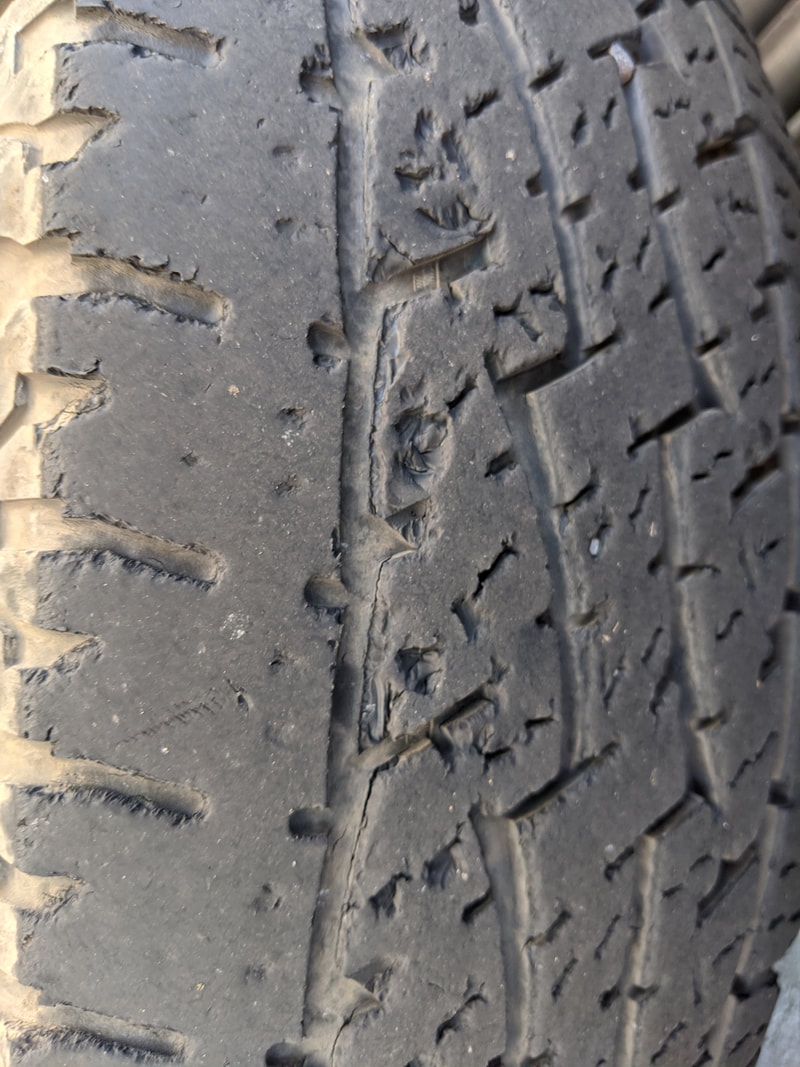
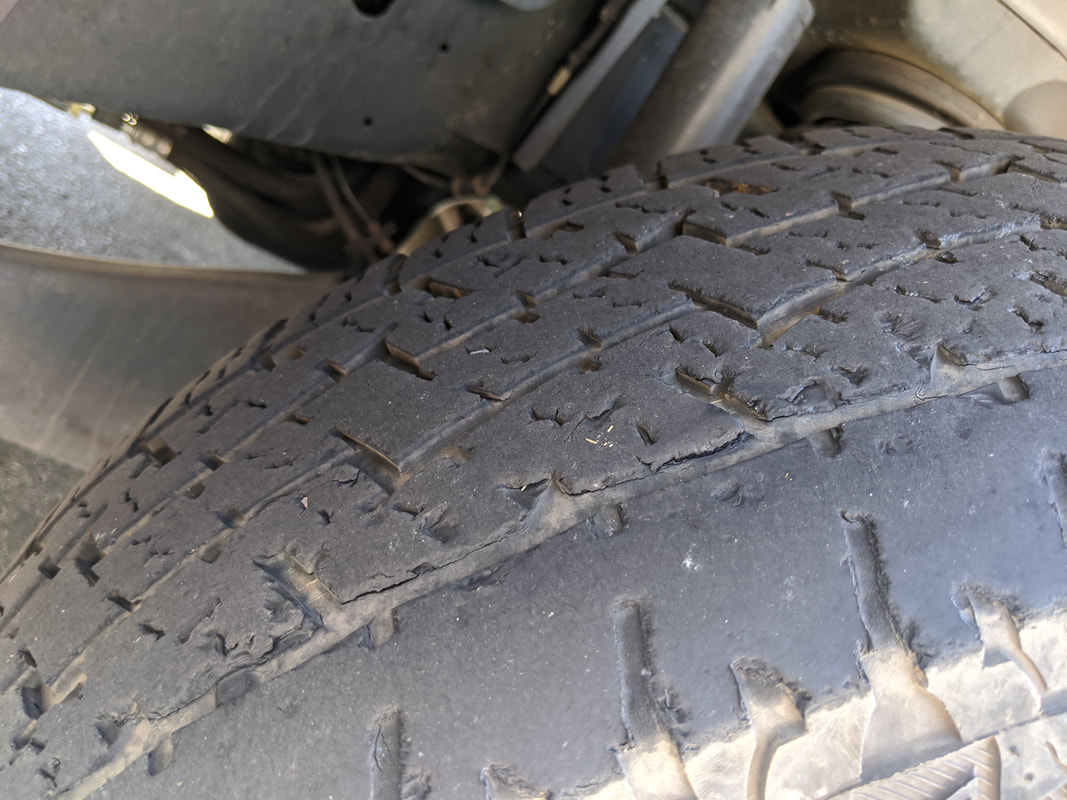
Typically, we spend one week in a location, offering static tours Monday through Thursday and then flying passengers on Friday, Saturday, and Sunday. Then we move to a new location on Monday. Because of tour stop cancellations due to COVID-19, we’re spending two weeks in Bozeman, Montana, before moving on to Missoula. Bob and I will fly back to Massachusetts from there. Weathering the Storms Speaking of Massachusetts, Gulliver and Tagalong experienced their own adventure while we’ve been away. A major storm blew through the area and downed some trees, which toppled wires and resulted in a power outage. Thankfully, Gulliver and Tagalong were uninjured, and the power has since been restored. So we’ll find out when we get back how the items in our refrigerator and freezer fared. Meanwhile, we’re honored to be able to be part of the B-25 summer tour. 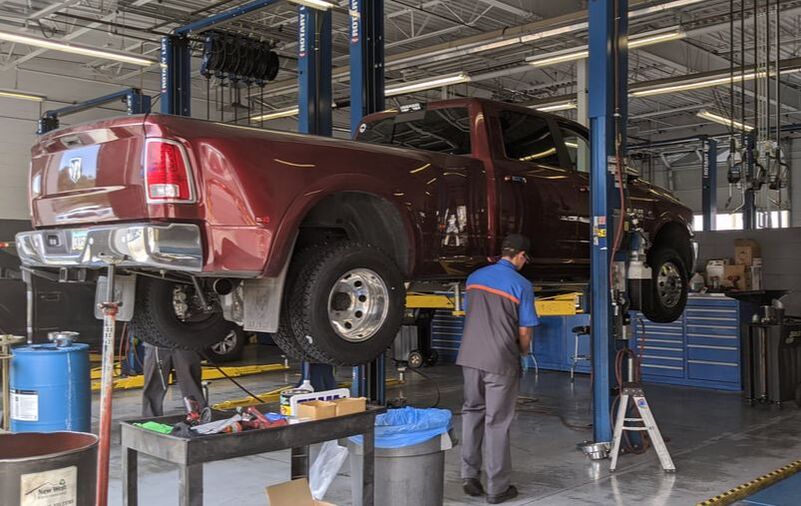 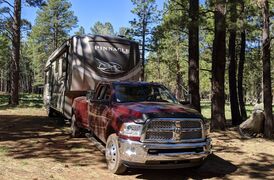 We spent our first week on the road north of Flagstaff, Arizona, near Humphrey’s Peak, where high temperatures ranged between 60 and 70 degrees and lows dipped down to 27. Yes, you read that right: 27. We had to dig out our winter clothes and heavy blankets, especially after leaving 100-degree temperatures in the Valley. We camped with Bob’s brother, Tom, and family. They’ve been full-time RVers for two years and gladly shared lots of tips and tricks. We couldn’t have asked for a better way to start our journey (although a little warmer wouldn’t have been bad). Since I don’t have a full-time job right now, we decided to get a jump-start on the holiday weekend and head to Oregon. We planned to travel to Medford, Oregon, in three days. Plans are subject to change, and they certainly changed for us. Pit Stop in Las Vegas We made it north of Las Vegas around 4:30 p.m. when a fellow motorist waved us down to let us know something looked wrong with one of our truck tires. We thanked him, moved to the right, and started navigating Google Maps to find a gas station with enough clearance for our trailer. As it turned out, the exit we took also led to a tire shop — probably the last easy-to-get-to tire shop before leaving the greater Las Vegas area. We went directly there. Upon examination, we realized the tread on our front passenger tire had started to split. It wouldn’t have been much longer before it let go completely. The other front tire didn’t look much better. God was definitely watching over us. If we had attempted to drive to our intended destination, we could have had a major incident on the freeway. Unconventional Lodging The listing agent for the sale of our house had encouraged us to get new tires before our journey. We should have listened to him. We decided to replace all six truck tires, but the shop couldn’t get them until the next day. Not wanting to pull the trailer anywhere with the unsafe truck tires, we spoke with the store manager about where we might be able to park the trailer. He called the owner, and they agreed to let us park our rig at the back of their lot overnight. Even better, they let us sleep in it on the property as long as we didn’t open the slides. (Fortunately, our model makes it easy to get to the bedroom and bathroom without opening any slides.) And, the property had 24-hour surveillance. 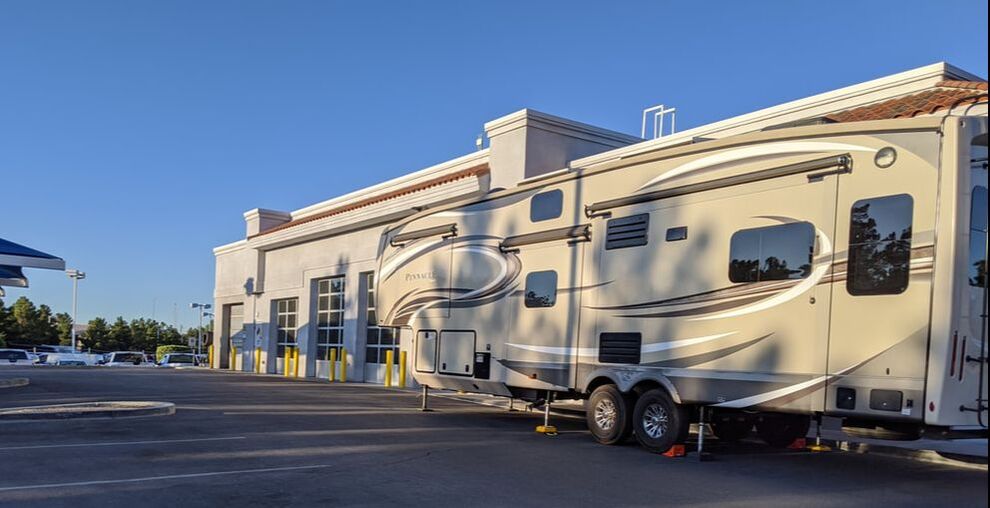 Rolling with the Punches
We could have been frustrated and upset, but instead, we chalked up the detour to part of the adventure. We gained time to bum around the northern Las Vegas area, taking a Lyft to a nearby restaurant for dinner. The beautiful thing about our new lifestyle is we don’t have to be anywhere at any certain time. So, we’ll just arrive in Oregon a day later than anticipated. No big deal. The important thing is we still have our home and each other, and Gulliver has new shoes. |
AuthorThis is the travel blog of full-time RVers Bob and Lana Gates and our truck, Gulliver, and fifth wheel, Tagalong. Categories
All
Archives
July 2024
|










 RSS Feed